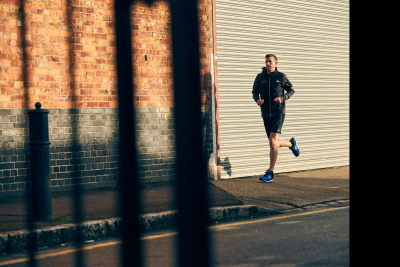
For such a common issue, it might surprise you to know that the exact reason for cramping is still unknown, however following the tips below should help minimise the effects of cramp on your training.
Hydration and electrolytes
Many people blame inadequate hydration or electrolyte levels for their cramping and, although some studies have shown that consuming a 6% carbohydrate sports drink can help prevent them, other studies have failed to back this up and, recent work with Ironman triathletes found no link at all.
Going too hard
The most likely cause of cramping is a sudden increase in exercise intensity. So, if you ride harder or longer than you are used to or capable of, you can expect to cramp.
Night time
However, it is not only on the road that you can suffer from cramps. Night cramps are a painful and common phenomena. As these cramps are happening when you are lying in bed, exercise intensity can’t be the reason for them.
- To avoid cramps ease back on your pace and/or distance and check out your training zones to make sure you’re working at the right intensity. If you’re out for a long run or ride for example you should spend time in zone 2.
- Follow a suitable training plan that builds in a gradual progressive way.
- Stay well hydrated, before, during and after exercise. Taking on fluids containing electrolytes even during cooler weather.
- Studies suggest that stretching can help to alleviate cramp and that regular stretching in muscles that are prone to cramping.
- Some studies of long term sufferers of cramp have shown magnesium supplementation to be helpful. Eat foods rich in magnesium and calcium and, if necessary, consider magnesium supplementation.
- Triathlete? If your position on the bike isn’t correct, you could be putting unnecessary load on certain muscle groups and causing them to cramp.
Cross training is a great form of training from recreational runners just starting out to more experienced elite athletes who perhaps have a history of injury. Supplementing your running training with cross training is a great way to maximise your fitness off less mileage. Each cross training alternative has its own unique benefits, but all have less impact than running.
Runners can become fitter and a better all-round athlete with a variety of sports and activities. Athletes from other sports can also improve their game by making running part of their programme!
You won’t lose any fitness with five days away from the sport. If you do get injured and need an extended spell on the sideline, the rate at which you lose fitness can depend on how long you’ve been running for, how fit you were before the injury and how well you cross train.
Sign up for another event! Studies show if you’ve entered an event you’re more likely to stick to your training plan. However don’t forget to take appropriate rest based on the event you’ve just completed.
Neither extreme is ideal but your body can adjust as long as you take it slowly and carefully and beware of the risks. You’re more at risk of injury first thing in the morning, so avoid hard sessions first thing and warm up before heading out of the door. Running late at night is usually riskier for personal safety; so keep visible, avoid wearing headphones and stay alert.
Hill workouts are fantastic for improving VO2max and increasing muscle strength. They are also a great form of strength training. As a runner, you can do squats, lunges, and hamstring curls until your muscles burn, but hills are just as good and more functional.
Hill training strengthens the legs for running better than any other activity I know. At the same time it can help you improve leg speed and enhance your ability to run hills in races. Hill training provides a gentle introduction to faster running while improving your capacity to perform speed work down the line.
You should feel like you are running fast but controlled. It’s more important to focus on running at 75-85% of top speed and using great form. Don’t be afraid to exaggerate form when running strides at the end of a run.
This depends on the illness or injury in question. As a guide, if you’re feeling better and have managed to train and want to run it, then just start conservatively and see how the race progresses. If you start to feel really good, then pick up the pace. If not, just keep it as a training session. Don’t be afraid to adjust your goals. If you’re noting feeling 100% and feel you need more rest, then skip the race completely. There’s always plenty more opportunities.
In most cases, I just move on after being sick. Making up workouts often puts more stress on the body when it probably needs a gentle return to full training. Don’t panic and try and make up for lost runs.
Running downhill is an activity that is nearly impossible to mimic. There are no machines at the gym; no stretches or medical tools that can properly prepare your legs for the rigors of a long trail descent.
I am not a fan of running specific downhill sessions. Instead adding hill circuits into your schedule cannot only help you gain confidence in your downhill ability, but you’ll improve your sense of balance and leg turnover.
Intervals aren’t for everybody and can be very hard work. However you shouldn’t be scared off completely as they can be very beneficial.
Try running with a group of friends and vary the type of intervals you run and the terrain. Try running fartlek as a group, taking it in turns to dictate pace and duration of intervals to add variety and the element of surprise.
No, you don’t have to join a running club. We all run for different reasons, whether it’s to lose weight, keep fit or to enter and maybe even win races. But whatever the motivation for lacing up the trainers and hitting the roads and trails, there’s no requirement that you have to join a club.
Having said that, many running clubs offer a warm welcome to runners of all abilities. You don’t need to be super fit to join! And if a club is just not for you there are more and more running groups popping up.
Joining a gym might not necessarily make you run faster, however performing general strength work can help to prevent injuries and improve your running form. Simple body resistance exercises can be performed from home saving you valuable time and money!
This could be a result of D.O.M.S (Delayed onset of muscle soreness). Try stretching after a run, and make sure you are refueling as soon as possible following training with good sources of carbohydrate and protein. If the soreness persists, expert advice should be obtained from a physiotherapist or medical professional.
There are no specific rules about breathing whilst running, however we’d always recommend warming up prior to running and trying to keep a regular deep breathing pattern. It’s better to use your nose and mouth to breathe in and out.
What you eat and drink after a run is important, in terms of maximizing your recovery. Remember the three ‘r’s’ – rehydration, replenishment, repair – and you’ll be raring to go again in no time. Check out our top ten recovery foods in our nutrition and hydration guide on the website. If your legs are sore after an event do some walking for a day or two until they ease out and then resume with some gentle jogging.
Training in the winter is no different from training at any other time of the year, except that you need to take the weather conditions into account. If it is too wet and muddy to run on grass try to find a path that is manageable. Winter running clothing can offer a degree of protection against the wind and the rain.
Generally, doubles will benefit more experienced runners who have maximised aerobic development but still need to boost mileage without having their easy days over 80-90 minutes and who are looking to recover more efficiently in preparation for harder sessions.
Running well at distances over 5k relies primarily on developing your endurance. Therefore, anything that a runner can do to boost their mileage will contribute to their overall development and progression hence the reason behind double days. Running twice per day puts your body in a glycogen-depleted state, which enhances training adaptations. Running one 8 miler is definitely harder on the body than running two 4 milers.
That depends on many factors including the type of runner you are and the event you’re training for. Also for many having time to train twice per day can be tricky.
Yes, you can do other exercise alongside your running training. This is known as cross training. As running is a relatively high impact exercise, alternative activities like swimming and cycling offer a way to have a good workout without the impact. Try not to replace runs with other activities (running is the best training for a running event) and be sure that any supplementary training isn’t tiring as rest is an important part of training.
Congratulations! Research has shown that you are more likely to stick to a new fitness plan if you have a specific goal to target – in this case an event. Why not register for a generic training plan or get in touch for a personal coaching plan to help get started? Most events will send you a confirmation pack or email followed by further information nearer to race day such as your race number, which you must wear on your front, and in most cases a timing chip which will track your own personal time from crossing the start line to crossing the finish line to provide you with your own personalised result.
Generally speaking it takes less training to complete a shorter distance event. If you are aiming for your first event, a 5km or a 10km race could be a good distance to start with. You can, however, run longer events but you should give yourself the appropriate amount of time to prepare. Also if your lifestyle is such that it will be hard to fit in the training required for a longer event, you may find it more achievable to aim for a shorter distance.
Research has shown that those who enter an event are more likely to stick to their training plan because they have a specific date to target.
All plans on this website from generic to personalised plans are developed by international athlete Jonny Mellor having competed at the highest level in the UK for over a decade. The plans therefore use tried and tested methods to help you improve in the most effective way, whilst avoiding mishaps that may lead to under preparation, overtiredness or injury. A training plan can give you direction as well as structure and guidance in your training.
Hill training is a series of intervals or short sprints performed up a gradient. Hill training is a great way of improving form and technique. Another form of hill training is by running a continuous run over hilly terrain.
Due to the principle of specific adaptation he best way to improve running on hills is to practice. Try selecting some more hilly routes for your training runs or integrate hill training into your schedules?
Most clubs are very welcoming to those starting out in running and also those who do not run at a fast pace. There are also more and more informal jogging clubs starting up – you may find adverts in your local press. These are excellent at keeping new runners motivated. For those based on the Wirral we have a beginners running group every Wednesday evening at 6:15pm from UTS Hoylake.
A treadmill pulls the ground underneath your feet, and you don’t face any wind resistance, both of which make running somewhat easier and why you should always add a 1% gradient on the treadmill to simulate outdoor conditions. Many treadmills are padded, making them a good option if you want to decrease impact.
It’s not uncommon to feel like you get to a point in your training and then struggle to move on – progression is not necessarily going to be a straight line when plotted on a graph. Plus there are also many other factors that can influence your training such as illness, workload, family life, etc. JM Coaching follows tried and tested methods and gradually increase the amount of time/distance that you run as your fitness improves. It could also be that you are setting off too fast. Always run very easily at the beginning of your run. The Kenyans shuffle to start their runs!
Sometimes it’s hard to keep going with your training when the weather is miserable, or simply that work and life get in the way. Entering an event is a great way to focus the mind as you have a fixed date in the future for which you will want to be ready. Hiring a coach is also a great motivator. Take inspiration from others on the JM Coaching Facebook page.
The right training pace for you is that at which you can run comfortably for the required amount of time. You should feel at the end of each run that you could do more. If you are struggling then you need to slow down. Over a period of time, as you get fitter, you will in fact cover more distance in the same time. You do not need to force this. If you have a training plan from JM Coaching, paces are automatically added to your sessions on a daily basis.
It can be hard to fit training around a busy family life, but there are things you can do to help. Perhaps you can run after dropping the kids off at school, or maybe there are a few others that you can meet for a run and then coffee. Is running to or from work an option? It may be possible to have other family members come out with you on training runs, maybe riding their bikes.
It can be hard to fit training around a busy or unpredictable job, but there are things you can do to help. Is running to or from work an option? Or running in your lunch break? Perhaps you can fit in a run before leaving for work on one or two mornings each week.
The number of times per week that you should training depends on your current level of fitness and your goals. Generally speaking, you should train three times each week when starting out. Where you go from there will depend on your ambition and your commitment. It is important not to increase your training until you are comfortable with your current load.
Sometimes when we break our usual daily routine – e.g. when we go on holiday – it can be hard to fit in training if family and other commitments fill up our days. Try to plan the next day in advance so that you can find a suitable time to go training while others are occupied with other activities. Try and think outside the box – it may be possible for others to accompany you on bikes while you run, or to set out on a walk and arrange to meet at a pre arrange spot at a set time. If possible you could do some research on the internet before you go away to find suitable routes, or choose a hotel with a gym – they are normally open from early in the morning until late at night, so it is easier to fit in your running.
You can run anywhere that’s safe and enjoyable. The best running routes are scenic, well lit, free of traffic, and well populated. Over time you can become more adventurous with your running routes.
How long is a piece of string! This depends on so many factors, your age, training history, past injuries, distance of event, ability etc etc. Should you have any doubt contact us at run@stockportpersonaltraining.com.
Your cool down should consist of an easy jog after the session and followed by some gentle stretching.
A warm down, also referred to as a cool down helps your body to gradually reach its normal resting state. Never neglect your warm down!
A warm up is used to get your body ready for a running session, and to try to reduce the risk of injury. Warm ups can differ according to your level of running and whether it is prior to training or an event. If you are going to complete a training run, then all you need to do is set off gently allowing your muscles to warm up in the early part of the run. For the more experienced runner, before training sessions and races you should complete a short jog then a few light stretches and some strides at a quicker pace. You should practice these strides in a training situation don’t try them out for the first time before a race.
A warm up is simply some gentle exercise to get the body ready for a higher intensity workout. Warming up is important because it gradually raises your heart rate, delivers oxygen to your muscles, and also raises your body and muscle temperature, making muscles suppler and your joints ready for the activity ahead. Mentally it also helps to focus your mind on the activity ahead.